
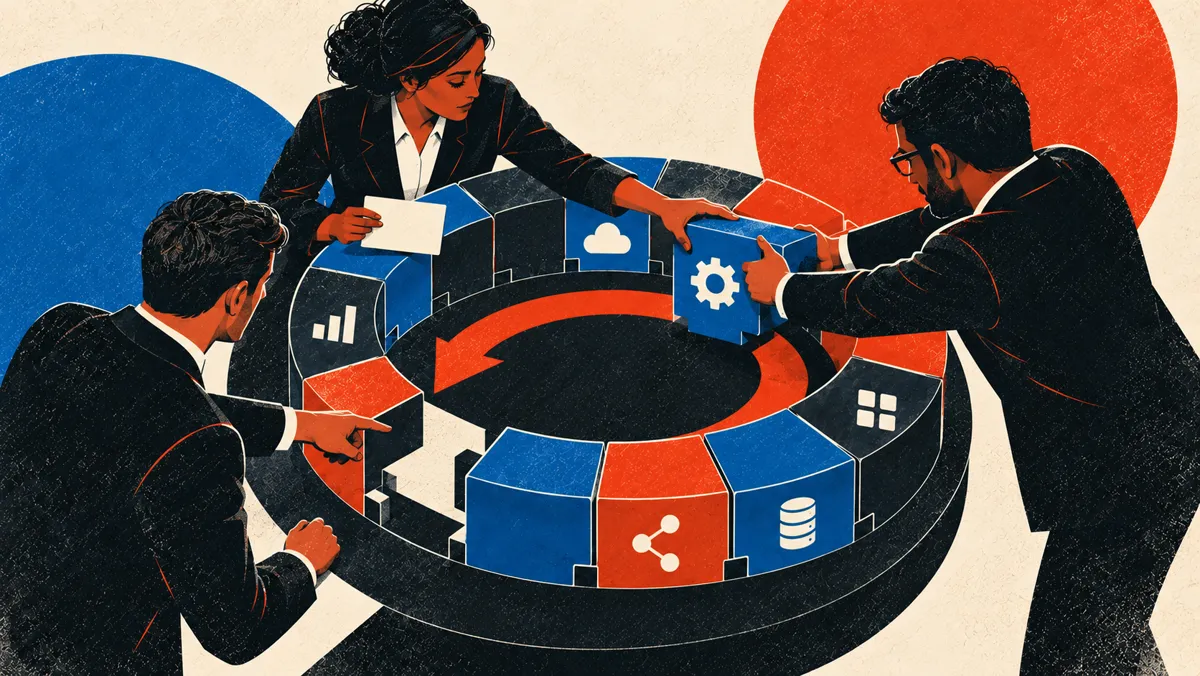
The modern enterprise runs on SaaS. It promises agility, seamless updates, and low upfront costs. But for many organisations, that promise has devolved into a multi-million-dollar trap.
According to Gartner, enterprise SaaS costs often surge by 10% to 20% at contract renewal, drastically outpacing standard IT budget growth. Worse, research from Zylo indicates that organisations leave an average of 36% of their SaaS licences unused, meaning more than a third of the seats you pay for are quietly wasted, before you even count duplicated platforms and expensive features your team never actually uses.
Having managed an enterprise portfolio of around 100 distinct SaaS platforms, I've seen firsthand how the SaaS ecosystem is fundamentally designed to lock you in, embed deeply into your operations, and squeeze your budget.
Here is the reality of how enterprise vendors operate and how to architect your way out of it.
The Vendor Playbook: 4 Traps That Kill Your Budget
Vendors know that a disruptive, two-year migration project is your worst nightmare. They use that fear as leverage through highly orchestrated traps:
- The "Whole-of-Org" Ratchet: Many tier-one ERP and HCM systems (Oracle HCM, Workday, and SAP SuccessFactors all work this way) mandate whole-of-organisation headcount pricing. You are forced to pay a monthly premium for every employee on your payroll, even if 90% of them only log in twice a year to complete a performance review. And if you try to reduce your actual user count, contracts are often built with "seat ratchets" that let you add but never remove, or volume tiers that quietly bump your per-user rate the moment you drop below a threshold, engineered so your total spend never falls.
- Forced Migrations & Disappearing Tiers: A common bait-and-switch involves starting your team on a cheap "reduced enterprise" tier. Years later, once your data is deeply entangled, the vendor announces that the tier "no longer exists" or does not meet their "terms and conditions of use". I've personally lived through a forced jump from a low, per-user monthly rate to full enterprise pricing, the kind of increase that would have cost an additional million dollars a year. Avoiding it wasn't simple. It took years of sustained effort and a small army of people across the business to migrate away and make sure that increase never landed.
- The Roadmap Illusion: Sales reps are notorious for selling vaporware, the industry's actual term for it. They'll lure you in by promising that critical integrations or regional features are "on the roadmap for next year." Years later, you're still relying on messy, disconnected legacy systems because that feature was quietly deprioritised the whole time.
- The Auto-Renewal Ambush: Vendor agreements often hide aggressive notice periods, anywhere from 30 to as much as 180 days. If you miss that window by a single day, you can be legally forced into a multi-year renewal for a platform your team actively dislikes and doesn't use.
The Implementation Illusion
When companies finally decide to migrate off an outdated or exploitative platform, they usually hire System Integrators (SIs) or implementation partners.
The harsh truth? Too many implementation partners are just order-takers. They will not challenge your existing setup. If you hand them messy data, they will load messy data into the new system. They expect you to handle the data cleansing, the cross-platform architecture, and the operational change management. Without an internal enterprise architect or digital partner to combat this, you are simply moving your mess from one expensive cloud platform to another.
The Antidote: Walk-Away Power
When a vendor knows you can't leave, you have no leverage. The only way to combat the SaaS squeeze is to build walk-away power.
You tip the scales by designing your digital ecosystem so that if a vendor plays games, you can easily pull the plug. Achieving this requires getting your architecture right from day one:
- Decoupled Architecture: Never let your core business data be held hostage by a single proprietary system.
- API-First Integrations: Build middleware connections that allow you to swap out individual SaaS tools without breaking your entire tech stack.
- Ruthless Governance: Actively hunt down shadow IT, consolidate overlapping tools, and implement strict utilisation reviews well before renewal notice periods hit.
Enterprise organisations have massive architecture and procurement teams to police this. Mid-sized businesses usually don't realise they are in a trap until they are staring down a six-figure renewal invoice.
At Rethink Digital, we act as that architectural shield. We help businesses design their SaaS ecosystems, manage integrations, and negotiate with vendors to ensure your software serves your business, not their bottom line.
Try it: unused licences
What are your unused licences costing you?
Move the sliders. On average, 36% of licences go unused (Zylo).
- You pay each year
- $50,400120 licences × $35 × 12 months
- Spent on unused licences
- $18,48044 licences nobody uses
Illustrative estimate using the article’s averages. Your own usage will differ.